Assessing The Westminster Model in the Caribbean
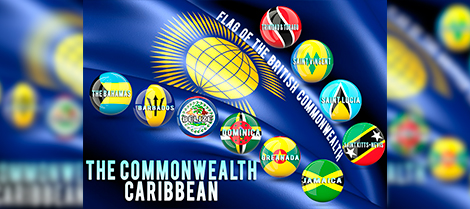
February contains the most celebrations of independence for Caribbean nations than any other month in the year: four. Grenada celebrated forty-three years of independence on February 7th; Saint Lucia celebrated thirty-eight years of independence on February 22nd; Guyana celebrated forty-seven years as a republic on February 23rd; and The Dominican Republic celebrated one hundred seventy-three years of independence on February 27th. With the exception of The Dominican Republic, these nations are all former colonies of the United Kingdom, who upon their independence adopted the Westminster model as their form of government. Given the plethora of independence celebrations in February, it seemed a fitting time to revisit and evaluate the Westminster model in the Caribbean.
Since gaining independence from The United Kingdom 1962-1980, many of the English-speaking islands in the Caribbean, specifically the twelve nations that form The Caribbean Community (CARICOM), adopted the British Westminster form of government. Nevertheless, independence for these former British colonies was not truly about independence. Norman Girvan observed that independence was about the entrenchment of the two-Party system…and preservation of the laws, institutions, and symbols of the colonial state. These former colonies are now member of the British Commonwealth of Nations. Queen Elizabeth remains head of state and represented by a Governor-General whose role is mainly ceremonial. This form of government has a strong executive, the Prime Minister, in which almost all power lies. As the head of the ruling party, the Prime Minister and his Cabinet of Ministers are the government.
Independence in the Commonwealth Caribbean saw the birth of a the two-party system that took hold and became so engrained into these new societies, that some of its citizens placed party affiliation above love of country. What was also striking was how the Westminster model maintained the laws, foundations and symbols of colonialism. “Louis Lindsay concluded that the formal granting of the right of self-determination to traditionally devalued peoples of the Afro-Asian and Caribbean world was accompanied by devaluation of the meaning of independence itself.” Independence as not the benign act it may appear to have been; rather it was appeasement to blunt any strategies by leaders of these nations to rebel against colonialism in an all-out revolution resulting in emancipation for their people.