|
Assessing the Westminster Model in the Caribbean
by Peter Lyn René
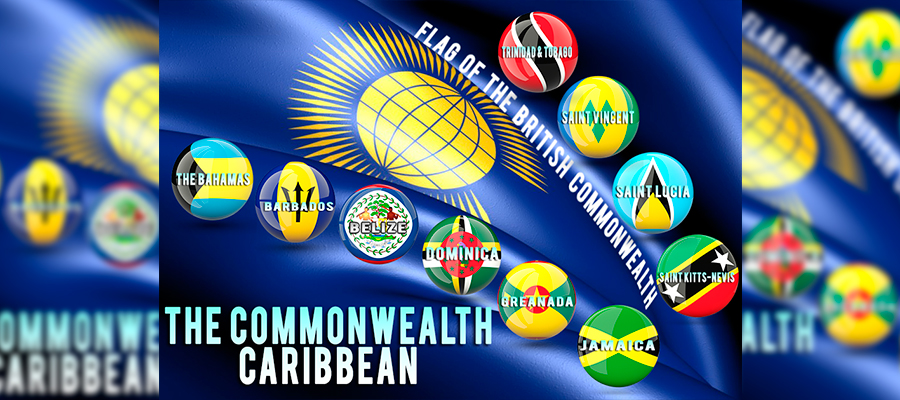
 Since gaining independence from The United Kingdom 1962-1980, many of the
English-speaking islands in the Caribbean, specifically the twelve nations
that form The Caribbean Community (CARICOM), adopted the British Westminster
form of government. Nevertheless,
independence for these former British colonies was not truly about
independence. Norman Girvan observed
that
independence was about the entrenchment
of the two-Party system…and preservation of the laws, institutions, and
symbols of the colonial state. These former
colonies are now member of the British Commonwealth of Nations. Queen
Elizabeth remains head of state and represented by a Governor-General whose
role is mainly ceremonial. This form
of government has a strong executive, the Prime Minister, in which almost
all power lies. As the head of the
ruling party, the Prime Minister and his Cabinet of Ministers are the
government.
Since gaining independence from The United Kingdom 1962-1980, many of the
English-speaking islands in the Caribbean, specifically the twelve nations
that form The Caribbean Community (CARICOM), adopted the British Westminster
form of government. Nevertheless,
independence for these former British colonies was not truly about
independence. Norman Girvan observed
that
independence was about the entrenchment
of the two-Party system…and preservation of the laws, institutions, and
symbols of the colonial state. These former
colonies are now member of the British Commonwealth of Nations. Queen
Elizabeth remains head of state and represented by a Governor-General whose
role is mainly ceremonial. This form
of government has a strong executive, the Prime Minister, in which almost
all power lies. As the head of the
ruling party, the Prime Minister and his Cabinet of Ministers are the
government.
The region is now over fifty years removed from its marches to independence;
however, little is left of the original Westminster model except a surreal
altercation of the original model. Globalization has also led to departures
of the original intent of the model; it also created circumstances that have
led to worsening conditions for the people: wide-spread government
corruption and the raiding of the general funds by office holders and their
stooges; a lack of transparency and the huge effects of invisible money
donations in political campaigns; the literally unchecked powers of the
executive; and weakness, lack of power or influence of local governments.
Is the Westminster form of government still the best option for the
former British colonies? Should the
region seek to replace and or reform Westminster?
| Read More |
Download PDF
|
|
|
Supreme Court Rejects Texas Voter I.D. Appeal
by Peter Lyn René
.jpg) This Research Paper traces the history of the
Texas Voter I.D. Law.
On January 23, 2017, the United State Supreme court declined to
hear an appeal from the government of Texas over its Voter ID
Law, previously struck down as unconstitutional by a lower
appellate court. The
ruling comes three days after the President Trump
administration’s Department of Justice (DOJ).
On Friday January 20, 2016, hours after his inauguration
of 46th President of the United States, they asked
for a delay in the case because of a change of leadership in the
country.
This Research Paper traces the history of the
Texas Voter I.D. Law.
On January 23, 2017, the United State Supreme court declined to
hear an appeal from the government of Texas over its Voter ID
Law, previously struck down as unconstitutional by a lower
appellate court. The
ruling comes three days after the President Trump
administration’s Department of Justice (DOJ).
On Friday January 20, 2016, hours after his inauguration
of 46th President of the United States, they asked
for a delay in the case because of a change of leadership in the
country.
In 2014, Texas enacted some of the toughest
voter ID laws in the country, requiring citizens to have a state
issued ID present at the time of voting. Driver Licenses and gun
permits were acceptable forms of ID; however, student IDs could
not be used.
| Read More |
Download PDF
|
|
|
Fighting for the Uninsured: Government's Role in Public Health
by Peter Lyn René
.jpg) The
Commerce Clause states that Congress has power to specify rules
to govern the manner by which people may exchange or trade goods
from one state to another, to remove
obstructions to domestic trade erected
by states, and to both regulate and restrict the flow of goods
to and from other nations (and the Indian tribes) for the
purpose of promoting the domestic economy and foreign trade.
Cases decided specifically based on the Commerce Clause are
rare, few and far between.
The
Commerce Clause states that Congress has power to specify rules
to govern the manner by which people may exchange or trade goods
from one state to another, to remove
obstructions to domestic trade erected
by states, and to both regulate and restrict the flow of goods
to and from other nations (and the Indian tribes) for the
purpose of promoting the domestic economy and foreign trade.
Cases decided specifically based on the Commerce Clause are
rare, few and far between.
Before its being the chief component of Chief Justice John
Roberts decision to uphold the Affordable Care Act (ACA) as
constitutional, it was in 1995’s United
States v Lopez that
the clause came up in any legal decision by the court. In National
Federation of Independent Business v. Sebelius, the Supreme
Court decided, anchored by the Commerce Clause, that the ACA was
constitutional because the mandate was a tax. Since it was in
Congress’s powers to levy taxes, the ACA was, in fact,
constitutional.
| Read More |
Download PDF
|
|
|
| | |


.jpg)
.jpg)